
Menu


Close



Rolex Explorer 36mm vs 39mm vs 40mm: Which Size Is Right for You?
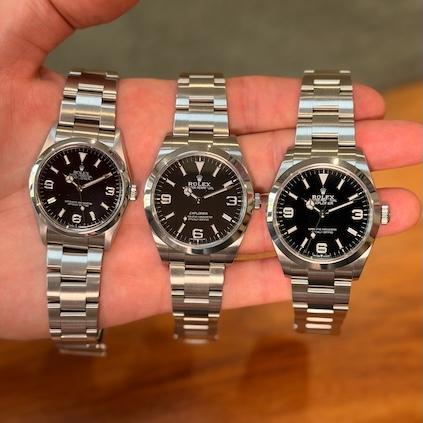
The Rolex Explorer 36 vs 39 vs 40 – three sizes, each offering a different feel on the wrist. The 36mm delivers classic proportions and understated versatility, the 39mm offers a balanced, modern alternative, and the 40mm provides a larger, more contemporary presence. The best choice depends on wrist size, style, and personal preference.
To understand how those differences translate in the real world, it’s worth taking a closer look at what actually sets each version apart.
It’s one of the simplest watches Rolex has ever made and one of the hardest to choose between, so in this blog, we’re comparing the three sizes of Rolex’s classic Explorer – 36mm, 39mm and 40mm, to understand the key differences and, more importantly, which might be right for you.
On paper, the differences look small. In reality, they’re not.
And one of the biggest factors is something most people completely overlook.
What Makes a Rolex Explorer an Explorer?
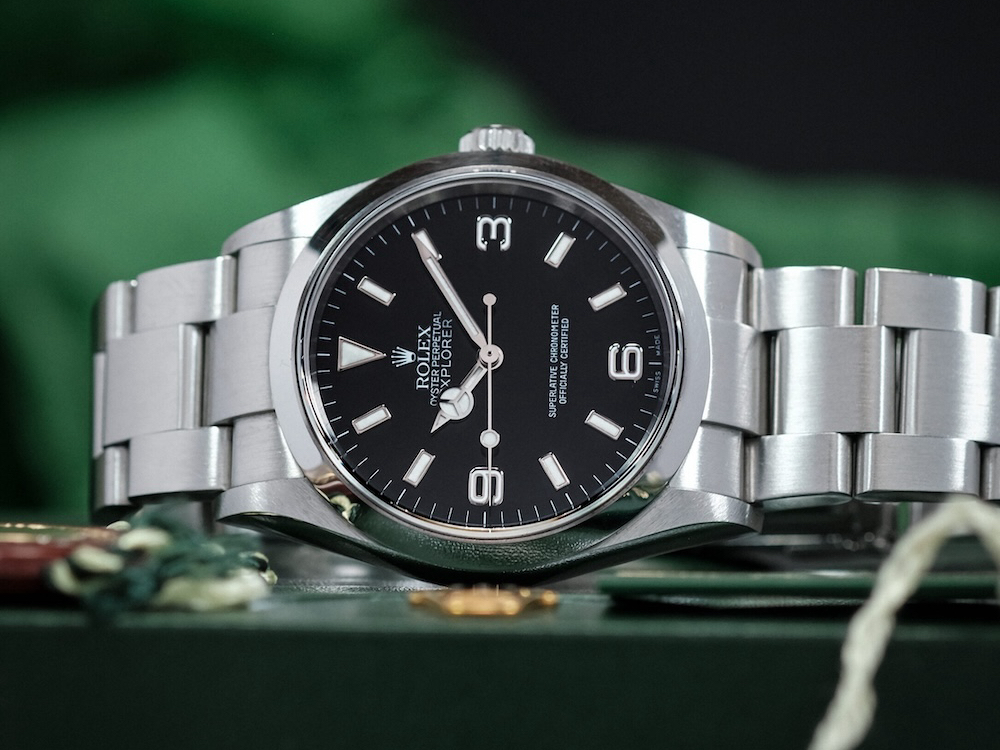
Before we get into sizes, it’s worth understanding what defines an Explorer.
The Rolex Explorer was introduced in the early 1950s, inspired by mountaineers like Sir Edmund Hillary. The brief was simple:
- A watch that was robust
- Easy to read in all conditions
- Built for real-world use
- On a strong, reliable bracelet
That’s where the now-iconic dial comes from – 3, 6, 9 Arabic numerals and a triangle at 12. What we now simply call the Explorer dial.
And here’s something important: In the 1950s, 36mm was considered a large watch
Rolex Explorer 36 vs 39 vs 40
Today, the Explorer exists in three key sizes:
- 36mm (114270) – the original proportions
- 39mm (214270) – the modern expansion
- 40mm (224270) – the latest evolution
Each one is unmistakably an Explorer. But they wear very differently.
Browse our current Rolex Explorer collection
Dial Differences – Subtle, But Important
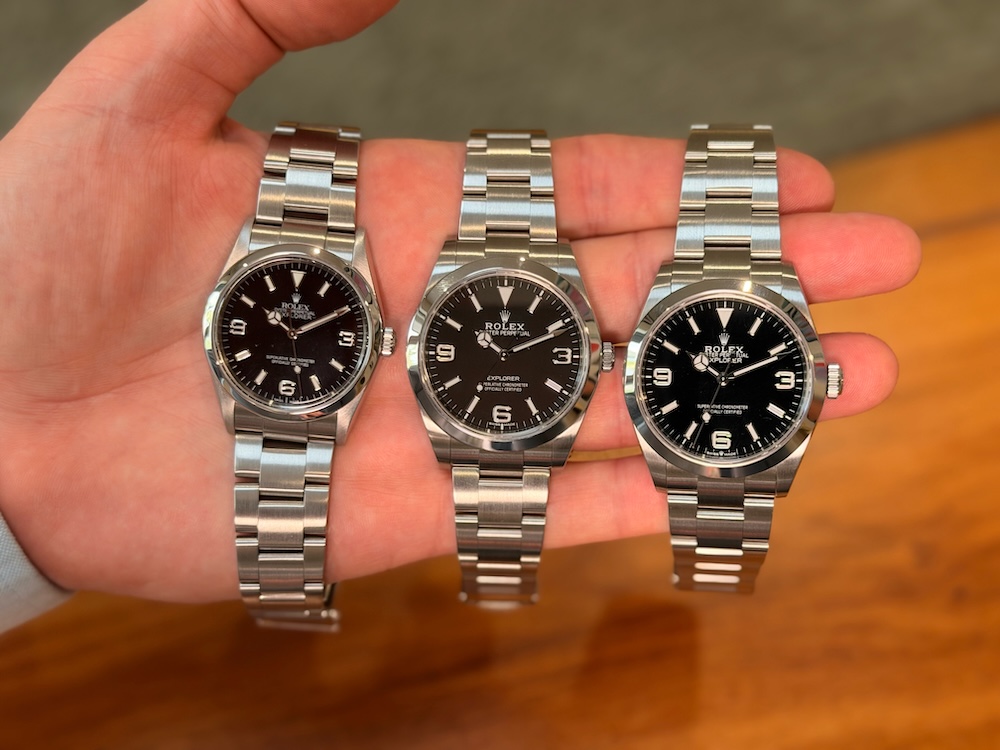
When you compare the three side by side, the DNA is identical:
- Same 3-6-9 layout
- Same triangular marker at 12
- Same clean, legible design
But there are refinements:
- The 36mm (older models) has non-lumed numerals
- The 39mm introduced lume-filled numerals
- The 40mm returns the Explorer text to its classic position
This is classic Rolex – subtle evolution rather than reinvention.
Get expert advice on buying pre owned in our Rolex Buying Guide
Case Size vs How It Actually Wears
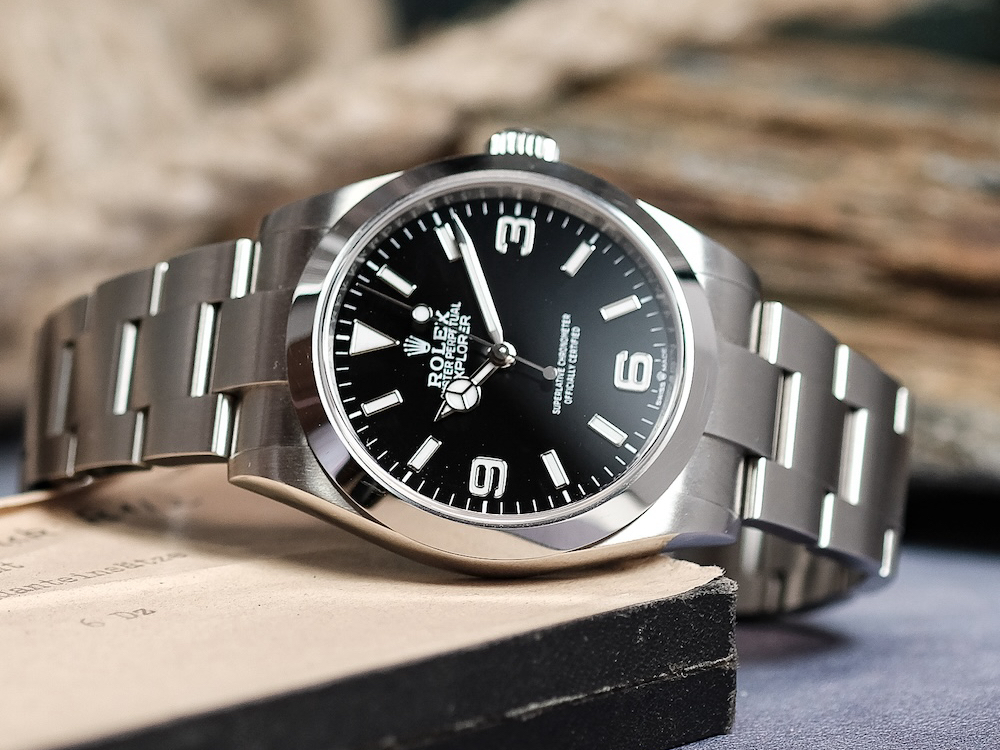
Now we come to one of the most misunderstood parts of this comparison.
Put a 36mm and 40mm Explorer side by side, and the 40mm looks dramatically bigger.
But in reality:
It’s only 4mm larger
So why does it feel so different?
1. Dial Size
A slightly larger dial changes the visual balance significantly.
2. Case Design
The 40mm belongs to the modern Rolex generation:
- Broader lugs
- Sharper edges
- More angular profile
It’s not just bigger – it’s more substantial in every way
Bezel & Crystal – Classic vs Modern Feel
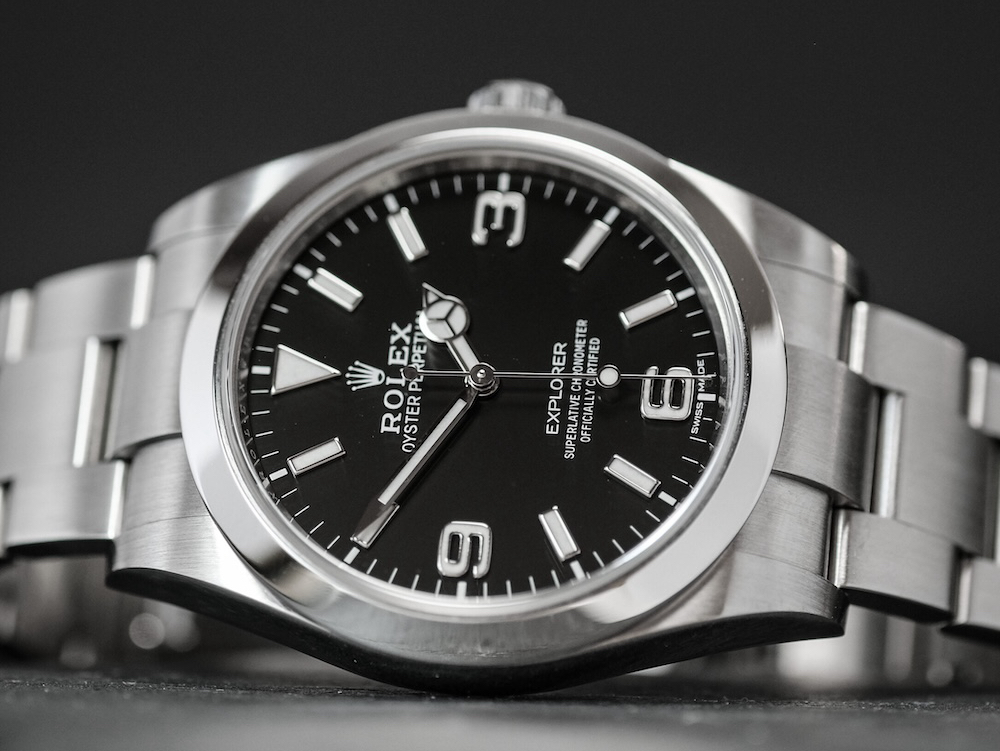
Comparing the 36mm to the 39mm reveals something interesting:
36mm
- More curved bezel
- Crystal sits proud
- Softer, classic look
39mm / 40mm
- Flatter bezel
- Lower crystal profile
- Sharper, more modern feel
These small changes make the watch feel significantly different on the wrist.
The Most Important Difference (That Nobody Talks About)
If there’s one thing to take away from this comparison, it’s this:
The biggest difference isn’t the case size – it’s the bracelet
36mm
- 19mm lug width
- Classic proportions
- Lighter, more traditional feel
39mm
- 20mm lug width
- Slightly narrower bracelet
- More refined, elegant look
40mm
- 21mm lug width
- Much broader bracelet
- More solid, more purposeful
This change in bracelet width and taper dramatically alters how the watch wears.
Compare this to other Rolex sports models in our Submariner vs Sea-Dweller guide
Rolex Explorer 36 vs 39 vs 40 – Which Should You Buy?
Let’s keep it simple,
36mm Explorer
- Best for smaller wrists
- Most authentic to the original
- Understated and versatile
39mm Explorer
- The middle ground
- Slightly more modern
- More refined feel
40mm Explorer
- Best for larger wrists
- Strongest wrist presence
- Most contemporary
Not sure where to start? Read our entry level luxury watches guide
What We See at Oakleigh Watches
In practice, the decision often comes down to wrist size but not always.
We regularly see clients assume they need the larger watch, only to try on the 36mm and realise it just feels right. There’s something about the proportions that works – it’s balanced, understated, and incredibly wearable.
For slimmer wrists or for women who enjoy wearing something slightly larger – the 36mm Explorer can look incredibly cool, striking that perfect balance between understated and distinctive.
Equally, others are drawn to the presence of the 39mm or 40mm, particularly if they’re used to modern sports watches and want that extra weight and substance on the wrist.
As always, the right choice isn’t just about size – it’s about how it feels when you put it on.
Final Thoughts
On paper, the difference between these watches is just a few millimetres.
On the wrist, it’s something else entirely.
And more often than not, it’s not the case size that makes the decision – it’s how the watch balances, sits, and feels.
See Them Side by Side
- Watch the full video comparison on YouTube
- Browse our latest Rolex Explorer stock
- Speak to the team about part exchange options