
Menu


Close


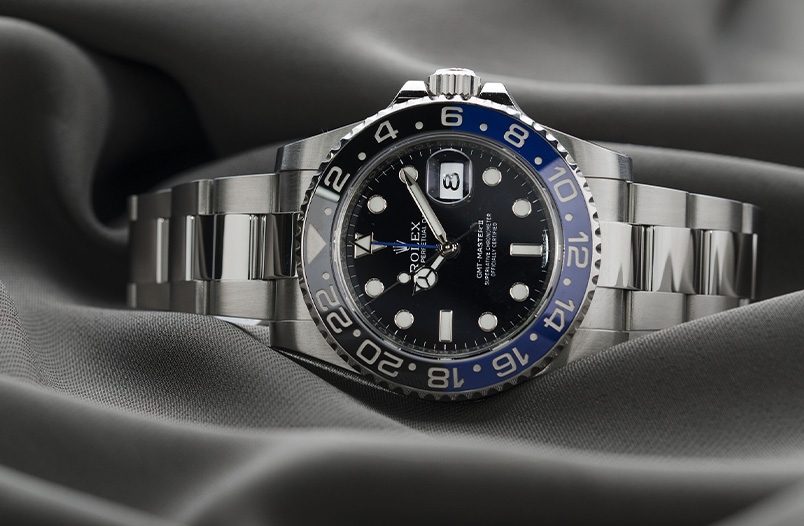

Rolex Explorer II Review: Rolex 16570 Polar ‘v’ Black Dial
If you’re searching for a detailed Rolex Explorer II review, particularly of the now-discontinued reference 16570 – you’ve come to the right place. The Rolex Explorer II 16570 holds a special place in the brand’s history, combining classic tool-watch aesthetics with modern refinements.
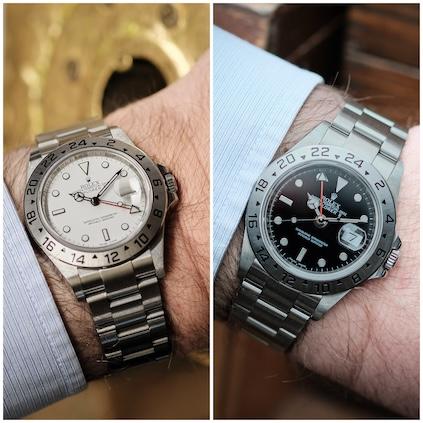
This blog is comparing two classic 40mm Rolex Explorer 2 (16570) models – the very last versions ever produced. With both watches briefly in our hands at the same time, we had the perfect opportunity to explore their similarities, their differences, and what makes these final-edition watches so significant in the world of Rolex collecting.
Meet the Watches
The 2010 Rolex Explorer II – Polar Dial
Our first watch is a 2010 Polar dial 16570, sold in May 2012 after the model had already been discontinued. That makes this one of the very last Polar 16570s ever sold, a detail that collectors and enthusiasts will appreciate when reading any Rolex Explorer II review focusing on late-production models.
The 2010 Rolex Explorer II – Black Dial
Our second piece is also a 2010 16570, this time with the striking black dial. Again, this is one of the very last black-dial Explorer IIs made before Rolex transitioned to the updated 42mm 216570 model.
Having both versions together gave us the perfect chance to examine their late-series upgrades side by side. At the time of writing this blog, both watches are in stock, so check out our Rolex Brand page to see if either or both are still available.
What Makes These Final 16570 Models Special?
1. Engraved Rehaut (Inner Bezel Ring)
One of the biggest differences between these final 16570s and earlier versions and a common point in any modern Rolex Explorer II review is the engraved rehaut.
Peer through the sapphire crystal and you’ll see the ROLEX engraving along the inner bezel ring, with the watch’s serial number at 6 o’clock. Rolex introduced this around 2010, and only a small number of 16570s feature it.
Earlier models lack this detail, making these late-series Explorers more desirable.
2. The Upgraded 3186 Movement
Another major upgrade is the Calibre 3186 movement. Most 16570 models feature the 3185, but Rolex quietly fitted a limited number of final 16570s with the newer 3186, the same movement used in the very last GMT-Master II 16710.
Why collectors want the 3186:
-
Smoother, more refined operation
-
Updated Parachrom hairspring
-
Less ‘wiggle’ on the GMT hand
-
Improved accuracy and reliability
-
Rarity – only a small percentage of 16570s have it
Both of the watches in this comparison feature this prized upgrade, making them standout pieces in any Rolex Explorer II review discussing end-of-run models.
Dial Differences: Polar vs. Black
Polar Dial
The ‘Polar’ dial has become iconic in the Rolex lineup.
Features:
- Crisp, bright white colouring
- Strong contrast from the black hour markers
- Makes the watch appear slightly larger on the wrist
- Extremely legible
Many enthusiasts feel the Polar is the more modern-looking variant, and its standout nature is frequently highlighted by enthusiasts.
Black Dial
The black dial version is more understated but equally compelling.
Features:
- Classic black dial reminiscent of the original 1655 Explorer II
- White gold surrounds on the hour markers
- Bright red GMT hand
- More subtle and ‘stealthy’
Where the Polar draws attention, the black dial offers quiet confidence.
Functionality: Built for Exploration
Both versions maintain the classic Explorer II functionality:
- Fixed 24-hour bezel
- Independently adjustable GMT hand to track two time zones
- Rugged 40mm Oystersteel case
- Sapphire crystal
- Oyster bracelet with flip-lock clasp
This remains one of Rolex’s best true tool-watches.
Which Would You Choose?
Both watches are:
- 2010 models
- Among the last 16570s ever made
- Full sets
- Virtually unmarked
- Fitted with the rare 3186 movement
- Featuring the engraved rehaut
So the decision really comes down to personal preference:
Polar Dial
- Bright, bold, modern
- Wears slightly larger
Black Dial
- Understated
- Classic and sleek
If you could only take one home … would you choose the black dial or the Polar?
Head over to our YouTube channel to watch the full video comparison and leave us your comments.