
Menu


Close


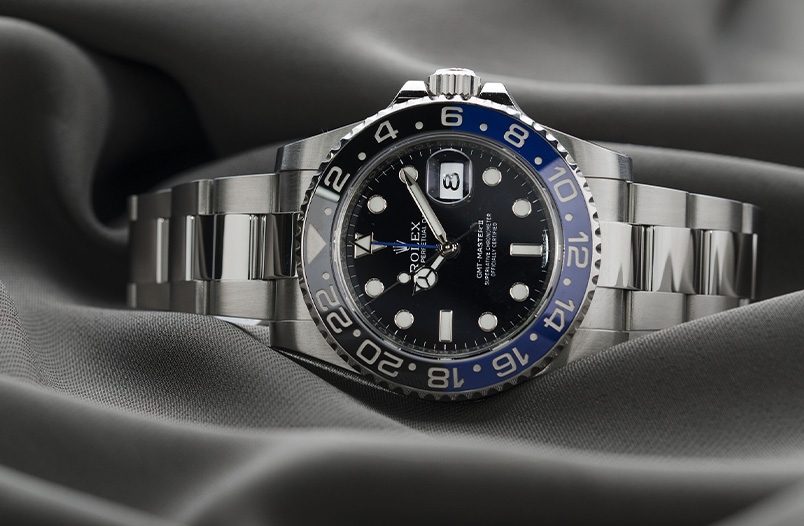

Rolex GMT-Master Classic Colours Explained: Pepsi, Root Beer, Black & Coke

The Complete Guide to Classic Rolex GMT-Master Colours
Few luxury watches are recognised by their nicknames quite like the Rolex GMT-Master, and understanding the different classic Rolex GMT-Master colours is one of the best ways to appreciate the history of one of Rolex’s most iconic collections.
Rather than referring to references such as the 6542, 16760 or 16710, enthusiasts simply talk about the Pepsi, Root Beer, Black and Coke. These classic Rolex GMT-Master colours have become part of watch collecting folklore, helping to make the pre-ceramic GMT-Master one of the most recognisable and desirable sports watches ever produced.
But these bezel colours weren’t originally created to make the watch look distinctive. They were designed to solve a practical problem for professional pilots.
In this guide, we’ll explore the history behind each of the classic Rolex GMT-Master colours, explain why Rolex introduced them, examine the key references that defined each colourway, and help you decide which GMT-Master could be the perfect addition to your collection.
In Brief
The original Rolex GMT-Master colours were originally developed to help airline pilots distinguish between day and night while tracking multiple time zones. Over the past seventy years, the Pepsi, Root Beer, Black and Coke bezels have each developed their own identity, collector following and historical significance. Whether you prefer the original Pepsi, the warmth of the Root Beer, the understated appeal of the Black or the cult status of the Coke, each of these Rolex GMT-Master colours represents an important chapter in the evolution of one of Rolex’s greatest sports watches.
Why Does the Classic Rolex GMT-Master Have Different Colours?
One of the questions we’re most frequently asked at Oakleigh Watches is why there are so many different Rolex GMT-Master colours.
The answer has little to do with fashion.
The GMT-Master was developed during the early 1950s in collaboration with Pan American Airways, whose international pilots needed a practical way of tracking two different time zones.
By combining a rotating 24-hour bezel with a dedicated GMT hand, pilots could keep track of home time while travelling across continents.
Rolex soon realised that dividing the bezel into two contrasting colours made it much easier to distinguish between daytime and nighttime hours at a glance.
That practical innovation became one of the defining design features in modern watchmaking and ultimately gave rise to the classic Rolex GMT-Master colours that collectors know today.
Pepsi – The Original Rolex GMT-Master Colour

If there’s one of the Rolex GMT-Master colours that defines the collection, it’s undoubtedly the Pepsi.
Introduced in 1955 on the original Rolex GMT-Master reference 6542, the red and blue bezel quickly became recognisable.
The earliest examples featured a Bakelite bezel insert, a material that looked spectacular but proved extremely fragile. Surviving original Bakelite bezels are exceptionally rare today, and examples with their original insert intact can command hundreds of thousands of pounds.
Recognising the issue, Rolex replaced Bakelite with aluminium in 1959, launching the legendary reference 1675, one of the longest-running and most influential GMT references ever produced.
The aluminium Pepsi insert remained in production across the:
- Rolex 1675
- Rolex 16750
- Rolex 16700
- Rolex 16760
- Rolex 16710
before aluminium production ended in 2007, when Rolex transitioned to Cerachrom ceramic bezels. Today, the Pepsi remains the benchmark against which all other Rolex GMT-Master colours are measured.
Root Beer – The Most Distinctive Rolex GMT-Master Colour

If the Pepsi represents tradition, the Root Beer demonstrates Rolex’s willingness to do something completely different.
Introduced around 1970, this was one of the boldest Rolex GMT-Master colours Rolex had ever produced. Rather than simply changing the bezel inseert, Rolex paired warm brown and gold tones with a two-tone Oyster or Jubilee bracelet, yellow gold accents and a bronze-brown dial.
The earliest references, particularly the GMT-Master 1675/3, featured what collectors affectionately call the ‘nipple dial’.
Unlike the flat luminous markers found on stainless steel sports models, these watches used raised hour markers crafted from solid yellow gold. They perfectly complemented the warm colour palette and remain one of the defining features of vintage Root Beer models.
Today, original examples with their correct nipple dial are highly sought after by collectors.
Like the other aluminium bezel GMTs, production eventually came to an end before Rolex revived the design in the early 2020s with the modern Everose gold and black Cerachrom Root Beer.
Whether your preference lies with the charm of the vintage nipple dial references or the refinement of the contemporary Everose models, the Root Beer has become one of the most distinctive Rolex GMT-Master colours ever produced.
Black – The Most Understated Rolex GMT-Master Colour

Often overshadowed by the brighter Rolex GMT-Master colours, the Black GMT remains one of the most versatile sports watches Rolex has ever produced.
Introduced in 1972, the black bezel remained in production until 2007, appearing across both the GMT-Master and GMT-Master II ranges.
Without the bright colours of the Pepsi or Coke, the black bezel offers a discreet sports watch that works effortlessly in almost any situation.
Many collectors also overlook another important milestone.
Although most people associate the black ceramic bezel with the 116710LN launched in 2007, Rolex actually introduced its first Cerachrom black bezel two years earlier on the 2005 50th Anniversary all-gold GMT-Master II.
For collectors wanting understated luxury, the black bezel deserves far more attention than it often receives.
Coke – The Rolex GMT-Master Colour That Never Returned

Among all the classic Rolex GMT-Master colours, the Coke is perhaps the one enthusiasts most want Rolex to bring back.
Unlike the Pepsi, there was never an original GMT-Master reference fitted with a Coke bezel.
Instead, the black and red bezel first appeared in 1983 on the hugely important GMT-Master II reference 16760.
Known to collectors as the ‘Fat Lady’ or ‘Sophia Loren’, thanks to its noticeably more curvy case profile, the 16760 represented one of the biggest technical milestones in GMT-Master history.
It introduced the calibre 3085, allowing the local hour hand to be adjusted independently and making it possible to track three different time zones.
Produced only between 1983 and 1988, the 16760 was available exclusively with the Coke bezel.
The colourway later became most closely associated with the 16710, which remained in production until 2007.
When Rolex moved to Cerachrom bezels, many enthusiasts expected the Coke to return.
It never did.
That absence has only increased collector demand, making the Coke one of the most desirable discontinued Rolex GMT-Master colours.
Which Rolex GMT-Master Colour Is Right for You?
Every one of the classic Rolex GMT-Master colours has earned its place in Rolex history.
- Pepsi is the original icon.
- Root Beer offers warmth, individuality and vintage character.
- Black is understated, versatile and effortlessly wearable.
- Coke combines historical significance with relative rarity.
Ultimately, there isn’t a ‘best’ colour.
The best Rolex GMT-Master colour is the one that suits your style, your collection and the story you want your watch to tell.
Frequently Asked Questions
What are the different Rolex GMT-Master colours?
The four classic Rolex GMT-Master colours are Pepsi (red and blue), Root Beer (brown and gold), Black, and Coke (black and red). Each colourway has its own history, key references and collector following, making them some of the most recognisable bezel designs in watchmaking.
Why are Rolex GMT-Master bezel colours different?
The different Rolex GMT-Master colours were originally designed to help airline pilots distinguish between daytime and nighttime hours on the 24-hour bezel. The contrasting colours made it easier to read a second time zone at a glance and have since become one of the defining features of the GMT-Master collection.
Why is the Rolex GMT-Master called the Pepsi?
The Pepsi nickname comes from the watch’s distinctive red and blue bezel, which resembles the colours of the Pepsi logo. Introduced in 1955 on the Rolex GMT-Master reference 6542, it remains the most famous of all the Rolex GMT-Master colours.
Why is it called the Root Beer?
Collectors coined the Root Beer nickname because of the watch’s brown and gold bezel, bronze-toned dial and yellow gold accents, which resemble the colours traditionally associated with root beer branding. The vintage 1675/3 is one of the best-known Root Beer references.
Why is the Rolex GMT called the Coke?
The Coke features a black and red bezel that shares the colours of the Coca-Cola logo. It first appeared on the GMT-Master II reference 16760 in 1983 and has become one of the most sought-after discontinued Rolex sports watches.
What is the rarest Rolex GMT-Master colour?
While rarity depends on the specific reference and condition, early Pepsi models fitted with their original Bakelite bezels are among the rarest and most valuable GMT-Masters ever produced. The short-lived 16760 Coke and well-preserved vintage Root Beer models with original nipple dials are also highly collectible.
Has Rolex ever made a ceramic Coke GMT?
No. Although collectors speculate almost every year that Rolex will reintroduce the Coke bezel in Cerachrom ceramic, the brand has never released a ceramic Coke GMT-Master II.
Which Rolex GMT-Master colour is the most collectible?
The Pepsi is generally regarded as the most iconic and universally desirable of the Rolex GMT-Master colours thanks to its long history and strong association with the collection. However, vintage Root Beer references, the 16760 Coke, and original Bakelite Pepsi models are all highly sought after by serious collectors.
Which Rolex GMT-Master colour is best for everyday wear?
If you’re looking for versatility, the Black GMT-Master is often considered the easiest to wear every day thanks to its understated appearance. For those wanting a more distinctive look, the Pepsi and Root Beer offer greater visual character while remaining highly wearable.
Can you change the bezel colour on a Rolex GMT-Master?
Some vintage aluminium-bezel references, such as the 16710, can accept different bezel inserts, allowing owners to switch between Pepsi, Coke and Black configurations. Modern ceramic GMT-Master II models are not designed for interchangeable bezel colours and should only be serviced or modified by Rolex-authorised professionals.
Watch the Full Video
Want to see all four Rolex GMT-Master colours side by side?
Watch our latest YouTube video, where Giles explores the history behind the Pepsi, Root Beer, Black and Coke GMT-Master references, explains the stories behind their famous nicknames, and shares what makes each colourway so appealing to today’s collectors.
Explore Our Current Rolex GMT-Master Collection
Whether you’re searching for the timeless appeal of the Pepsi, the vintage charm of the Root Beer, the understated versatility of the Black, or the collector appeal of the Coke, there’s a Rolex GMT-Master to suit every taste.
At Oakleigh Watches, we regularly stock a carefully curated selection of pre-owned Rolex GMT-Master and GMT-Master II references, each thoroughly authenticated, inspected and supplied with the reassurance of buying from an established independent luxury watch specialist.
Browse our current Rolex collection to see the GMT-Master models we have available today, or get in touch if you’re looking for a specific reference – we’re always happy to help source the right watch.