
Menu


Close


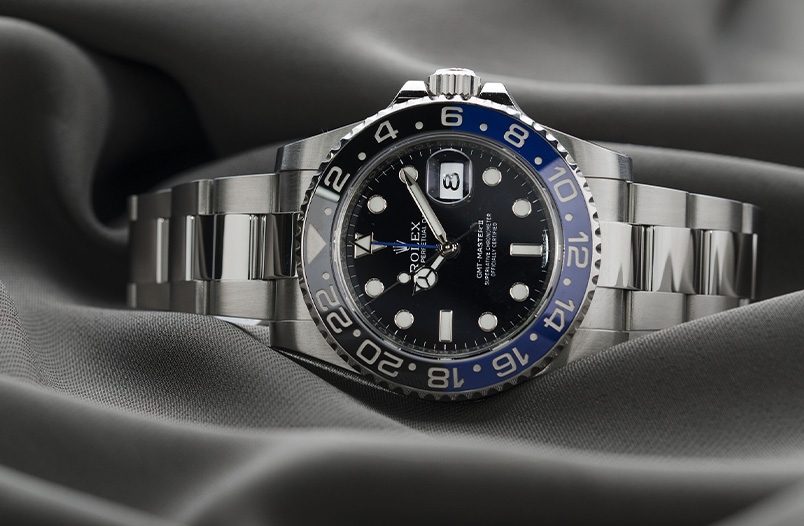

Rolex GMT-Master vs GMT-Master II: What’s the Difference?

At first glance, the Rolex GMT-Master and Rolex GMT-Master II can look remarkably similar. Both belong to the iconic Rolex GMT family of travel watches, and certain references produced alongside one another are so visually alike that you could easily mistake one for the other.
But there is one fundamental mechanical difference: the way the conventional hour hand operates.
On the original GMT-Master, the 12-hour and 24-hour hands are linked. On the GMT-Master II, the conventional local hour hand can be adjusted independently in one-hour increments without stopping the watch or disturbing the 24-hour hand.
It’s a seemingly small change that completely alters how the watch works when travelling.
So, is the original Rolex GMT-Master the purer collector’s watch, or is the GMT-Master II genuinely the better watch to own?
At a Glance
The Rolex GMT-Master is the original Rolex GMT travel watch, with its conventional hour hand and 24-hour GMT hand mechanically linked. It can display two time zones using its rotating 24-hour bezel.
The Rolex GMT-Master II developed this concept with an independently adjustable local hour hand, allowing travellers to change local time without disturbing the minutes, seconds or home-time display. Combined with the rotating bezel, a GMT-Master II can also be used to reference a third time zone.
For frequent travellers, the GMT-Master II is the more practical watch. For collectors, however, the history, character and numerous variations of the original GMT-Master give it an appeal that goes far beyond functionality.
Rolex GMT-Master vs GMT-Master II: Key Differences
| Feature | Rolex GMT-Master | Rolex GMT-Master II |
|---|---|---|
| Introduced | 1950s | 1980s |
| Local hour hand | Linked to 24-hour hand | Independently adjustable |
| Second time zone | Read using rotating 24-hour bezel | 24-hour hand can remain set to home time |
| Third time zone | No | Can be calculated using rotating bezel |
| Travel adjustment | Conventional time-setting | Local hour moves independently in one-hour jumps |
| Key references | 6542, 1675, 16750, 16700 | 16760, 16710 and modern ceramic references |
| Collector appeal | Original GMT concept, vintage character and variation | Greater functionality and wider choice |
| Best suited to | Collectors prioritising history and originality | Travellers and those wanting greater practicality |
How Does a Rolex GMT-Master Work?

Rolex introduced the GMT-Master in the 1950s for pilots and travellers who needed to keep track of more than one time zone.
The key addition was a 24-hour hand, which makes one complete circuit of the dial every 24 hours rather than every 12.
This hand is read against the watch’s rotating 24-hour bezel.
On a traditional GMT-Master movement, however, the normal hour hand and the 24-hour hand are linked together. Set one and you effectively set the other.
To display a second time zone, you rotate the bezel so the 24-hour hand indicates the required time against the bezel scale.
It’s an elegant and straightforward solution, but when you arrive at your destination and want to change the conventional local time, you need to reset the watch in the normal way.
And that’s where the GMT-Master II changed things.
How Does the Rolex GMT-Master II Work?

The defining feature of the Rolex GMT-Master II is its independently adjustable conventional hour hand.
Rather than changing all of the hands when you arrive in another time zone, the local hour hand can be moved forwards or backwards in one-hour increments, while the minute hand and 24-hour GMT hand continue to run.
The minute hand and 24-hour hand continue to run.
That means you can leave the 24-hour hand set to your home time, then simply move the conventional hour hand to your destination’s local time.
The rotating bezel provides another layer of functionality. Used with the 24-hour hand, it allows the wearer to reference a third time zone.
In practical terms, the GMT-Master II is therefore the more capable travel watch.
It’s faster to adjust, preserves accurate timekeeping when changing time zones and provides more information without making the dial itself more complicated.
Important Rolex GMT References
The Rolex GMT family spans more than seven decades and includes some of the most important references in Rolex sports-watch history.
The original Rolex GMT-Master began with the 6542, followed by the long-running 1675 and later references including the 16750 and 16700.
Across these generations you’ll find significant changes to cases, bezels, crown guards, dials, bracelets and movements.
As a result, two vintage GMT-Masters can offer very different ownership experiences depending on when they were produced.
This is also part of their appeal to collectors. You’re not simply choosing a model; you’re choosing a particular period in the development of the GMT-Master.
The Arrival of the GMT-Master II

The Rolex GMT-Master II arrived during the 1980s with the reference 16760.
Collectors commonly know this watch as the “Fat Lady”, or alternatively the “Sophia Loren”, thanks to its more substantial case.
Its importance goes considerably deeper than its nickname, however. The new movement and independently adjustable hour hand established the functionality that defines the GMT-Master II.
Later came the 16710, combining the more capable GMT-Master II movement with slimmer proportions and the familiar aluminium bezel inserts many collectors associate with classic Rolex sports watches.
Eventually, the collection evolved into the modern ceramic GMT-Master II family, bringing more substantial cases, ceramic bezels, upgraded bracelets and newer-generation movements.
Rolex GMT-Master 16700 vs GMT-Master II 16710

One particularly important point is that the Rolex GMT-Master II did not simply replace the GMT-Master when it was introduced. The two collections existed alongside one another for a considerable period.
That becomes particularly interesting when comparing the Rolex GMT-Master 16700 and GMT-Master II 16710. The two can appear remarkably similar at first glance, but mechanically they are different watches.
That distinction matters because it demonstrates that the GMT-Master II wasn’t simply a renamed or updated version of the same watch.
They were two different propositions.
The GMT-Master retained the original linked-hand arrangement, while the GMT-Master II offered the additional functionality of its independent local hour hand.
For part of this period, references such as the GMT-Master 16700 and GMT-Master II 16710 could appear remarkably similar at first glance despite working differently.
Vintage Character vs Modern Construction

The visual differences between a vintage Rolex GMT-Master and a later GMT-Master II depend heavily on the particular references being compared.
A vintage Rolex GMT-Master may have a softer aluminium bezel, a matte or gloss dial, aged luminous material and the lighter feel associated with an older Rolex bracelet.
A five-digit GMT-Master II retains much of that restrained character while adding the independent local hour hand.
Modern ceramic GMT-Master II watches are a different experience again.
Their ceramic bezels are highly resistant to scratching and fading, the bracelets and clasps feel substantially more solid, and the watches generally have much greater visual presence.
Some collectors see those developments as progress. Others prefer the warmth, proportions and ageing characteristics of the earlier aluminium-bezel watches.
That’s why choosing between a GMT-Master and GMT-Master II isn’t simply about function versus function.
It’s also about vintage character versus modern construction.
Is the Rolex GMT-Master II Better for Travelling?
If you regularly cross time zones, the GMT-Master II is unquestionably easier to use.
The independently adjustable local hour hand isn’t simply an additional complication that looks good on a specification sheet. It’s a genuinely useful feature.
Arrive in a new country and you can move the local hour hand forwards or backwards without stopping the watch or changing the home-time indication.
For someone buying a Rolex primarily as a travel watch, that makes a compelling argument for the GMT-Master II.
But functionality isn’t necessarily the deciding factor for a collector.
Why Choose the Original Rolex GMT-Master?
The original GMT-Master represents the original Rolex travel-watch concept.
References such as the 1675 offer decades of dial, bezel, case and bracelet variations for collectors to study.
With these watches, factors such as originality, provenance and condition can become considerably more important than technical specifications.
An original dial, correct hands, well-preserved case and period-correct bezel can have far greater significance to a collector than whether the local hour hand can be adjusted independently.
If history and vintage Rolex character are your priorities, the technically simpler GMT-Master can actually be the more interesting watch.
Rolex GMT-Master II 16710: The Sweet Spot?
There is also a very persuasive middle ground: the Rolex GMT-Master II 16710.
This five-digit GMT-Master II combines the independent local hour hand with many of the characteristics collectors appreciate about earlier Rolex sports watches.
You get the more useful travel functionality, but retain an aluminium bezel, relatively restrained case proportions and the lighter character of an earlier-generation Rolex.
For many enthusiasts, that combination makes the 16710 one of the most versatile Rolex watches ever produced.
And for Giles, it’s something of a personal sweet spot – as regular viewers of the Oakleigh Watches YouTube channel may have noticed from the GMT he frequently wears.
What Should You Look for When Buying a Pre-Owned Rolex GMT?
When buying an older pre-owned Rolex GMT-Master, establishing exactly what is original to the watch is particularly important.
Look carefully at the case shape and signs of previous polishing, along with the dial, hands, bezel insert and bracelet. Consistency between the components matters, as do the condition of the movement and the watch’s service history.
With a modern GMT-Master II, condition and completeness remain important, as does bracelet wear, but buyers also have considerably more choice when it comes to specific generations, bezels and bracelet configurations.
And while nicknames such as Pepsi, Coke and Batman provide useful shorthand, the reference number is ultimately what tells you exactly which Rolex GMT you’re buying.
Related Reading: Rolex GMT-Master Colours Explained – From Pepsi and Coke to Root Beer and Black, discover the history behind the most famous Rolex GMT bezel colours in our complete guide.
Rolex GMT-Master vs GMT-Master II: Which Should You Buy?
There isn’t a single answer because these watches appeal for different reasons.
Choose a Rolex GMT-Master if history, originality and vintage character are your priorities. The earlier watches offer an enormous amount for collectors to explore, and their relative mechanical simplicity is part of their charm.
Choose a GMT-Master II if you want the more practical travel function, an independently adjustable local hour hand and a much broader choice of specifications and generations.
And if you want elements of both?
A five-digit GMT-Master II deserves serious consideration. It combines much of the character and proportion of an earlier Rolex with the functionality that makes the GMT-Master II such a useful travel watch.
Ultimately, don’t simply choose between the names GMT-Master and GMT-Master II.
Choose the reference, condition, originality and functionality that suit the way you actually want to own and wear the watch.
Watch the Rolex GMT-Master vs GMT-Master II Comparison
Want to see the differences in action?
In our accompanying YouTube video, Giles compares the Rolex GMT-Master and GMT-Master II, demonstrates how the two movements operate and explains why the technically simpler watch may sometimes be the more interesting choice for a collector.
Explore Pre-Owned Rolex GMT Watches
Whether you’re looking for a vintage Rolex GMT-Master, a neo-vintage Rolex GMT-Master II or a modern ceramic reference, choosing the right example is every bit as important as choosing the model.
At Oakleigh Watches, we carefully select our pre-owned Rolex watches for their condition, originality and provenance, and we’re always happy to help if you’re searching for a particular GMT reference.
→ Browse our current Rolex collection
→ Contact us about sourcing a particular Rolex GMT
Frequently Asked Questions
What is the difference between the Rolex GMT-Master and GMT-Master II?
The main difference is the way the local hour hand operates. On the original Rolex GMT-Master, the conventional 12-hour hand and 24-hour GMT hand are linked. On the Rolex GMT-Master II, the local hour hand can be adjusted independently in one-hour increments without disturbing the minute or 24-hour hands. This makes the GMT-Master II considerably easier to adjust when travelling between time zones.
How does a Rolex GMT-Master work?
The original Rolex GMT-Master uses an additional 24-hour hand that makes one complete circuit of the dial every 24 hours. This is read against the rotating 24-hour bezel to track a second time zone. Because the conventional hour hand and GMT hand are linked, the bezel is used to offset the second time zone.
How does the Rolex GMT-Master II work?
The Rolex GMT-Master II allows the conventional local hour hand to be moved forwards or backwards independently in one-hour increments. The 24-hour GMT hand can therefore remain set to home time while the conventional hour hand displays local time at your destination. The minutes and seconds continue running while the local hour is changed.
Can a Rolex GMT-Master II display three time zones?
Yes. The conventional hour hand can display local time while the 24-hour GMT hand remains set to a second time zone. By rotating the 24-hour bezel and reading the GMT hand against it, the GMT-Master II can also reference a third time zone.
Did the GMT-Master II replace the GMT-Master?
No. The introduction of the GMT-Master II did not immediately bring production of the original GMT-Master to an end. The two models were produced alongside one another for a number of years, with the GMT-Master retaining its linked hour hands while the GMT-Master II offered the independently adjustable local hour hand.
What was the first Rolex GMT-Master II?
The Rolex GMT-Master II reference 16760 was the first generation of the GMT-Master II. Introduced in the 1980s, it brought the independently adjustable local hour hand that became the defining feature of the GMT-Master II. The reference is commonly nicknamed the “Fat Lady” or “Sophia Loren” because of its more substantial case.
What is the difference between the Rolex GMT-Master 16700 and GMT-Master II 16710?
The Rolex GMT-Master 16700 and GMT-Master II 16710 can look remarkably similar, but their movements operate differently. The 16700 retains the traditional GMT-Master arrangement with linked conventional and 24-hour hands. The 16710 has an independently adjustable local hour hand, giving it the more practical travel functionality of the GMT-Master II.
Which Rolex GMT is best for collectors?
That depends on what you value in a Rolex GMT. Earlier GMT-Master references appeal for their history, vintage character and the many variations in dials, bezels, cases and bracelets. The five-digit GMT-Master II, particularly references such as the 16710, offers an appealing middle ground, combining classic aluminium-bezel styling and restrained proportions with the more practical independently adjustable hour hand.