
Menu


Close



Which Vintage Rolex Watch Should You Buy?
Originality, Rarity, and Condition Explained Through Three References
Choosing a vintage Rolex watch is rarely about chasing a single reference. Instead, it’s about understanding which specifications matter and why certain watches continue to stand apart aesthetically, historically, and financially.
Rather than asking which vintage Rolex you should buy, a better question is:
What qualities should a vintage Rolex watch have?
To illustrate this, we’ll examine three important references currently in stock, each representing one of the core principles every collector should understand: originality, rarity, and condition.
1. Originality in a Vintage Rolex Watch
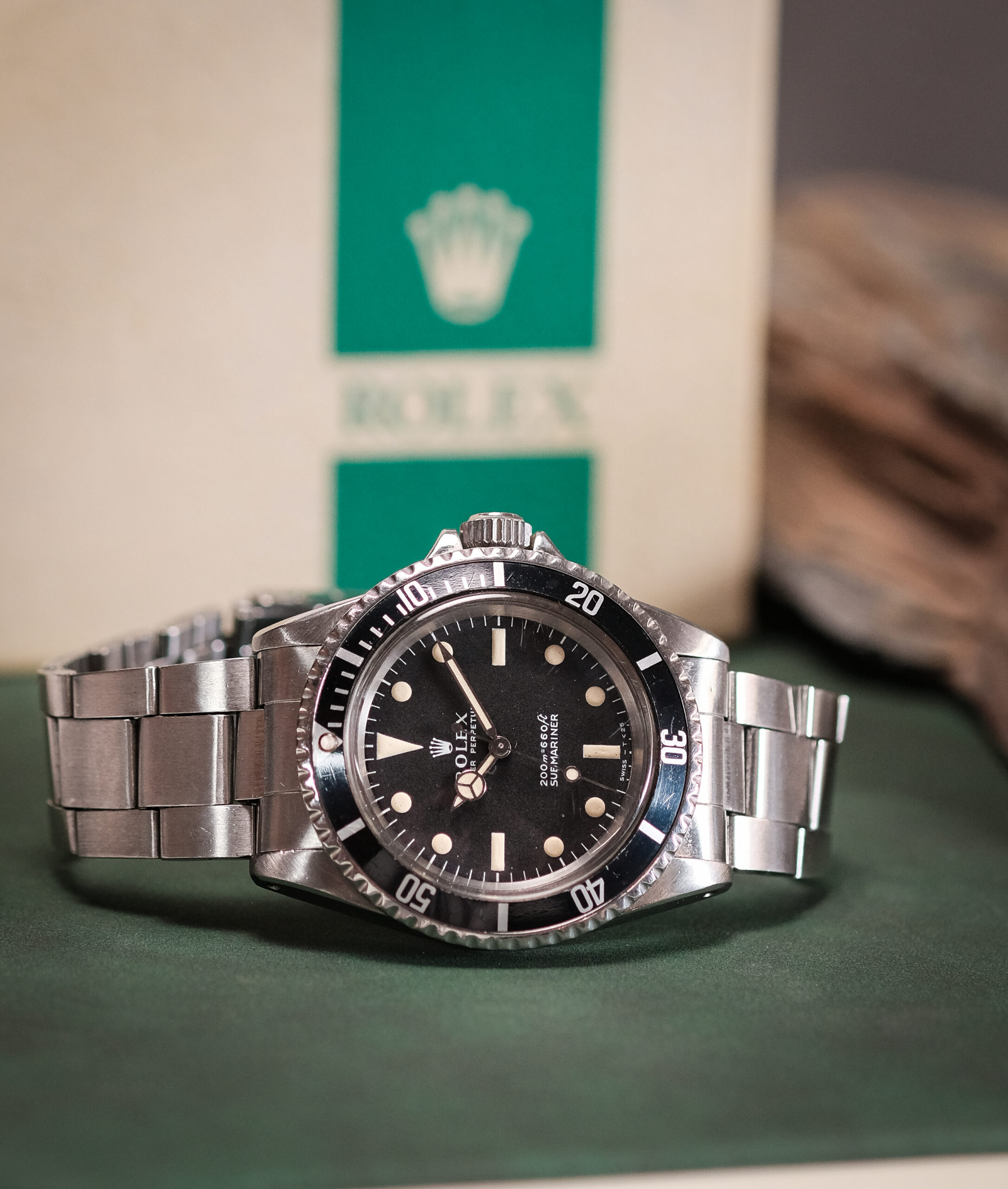
Submariner 5513 (1968)
Originality is the foundation of any great vintage Rolex watch.
The Submariner 5513 is a cornerstone reference. Produced as a non-chronometer model, it is prized not for certification, but for purity of design. This 1968 example features one of the most desirable traits collectors look for: a meters-first dial.
Early Submariners displayed depth ratings in metres before feet. During the late 1960s and early 1970s, Rolex reversed this order, making meters-first dials significantly more desirable today.
Originality extends beyond dial text. On this watch:
-
The dial plots are original
-
All three hands are original
-
The colour of the lume matches perfectly between hands and plots
This is critical. On a watch approaching sixty years of age, the lume should be completely dead. If it still luminesces, replacement parts are almost certain. Matching, non-glowing lume is exactly what collectors want to see and this 5513 delivers a textbook example of originality.
2. Rarity & Production History
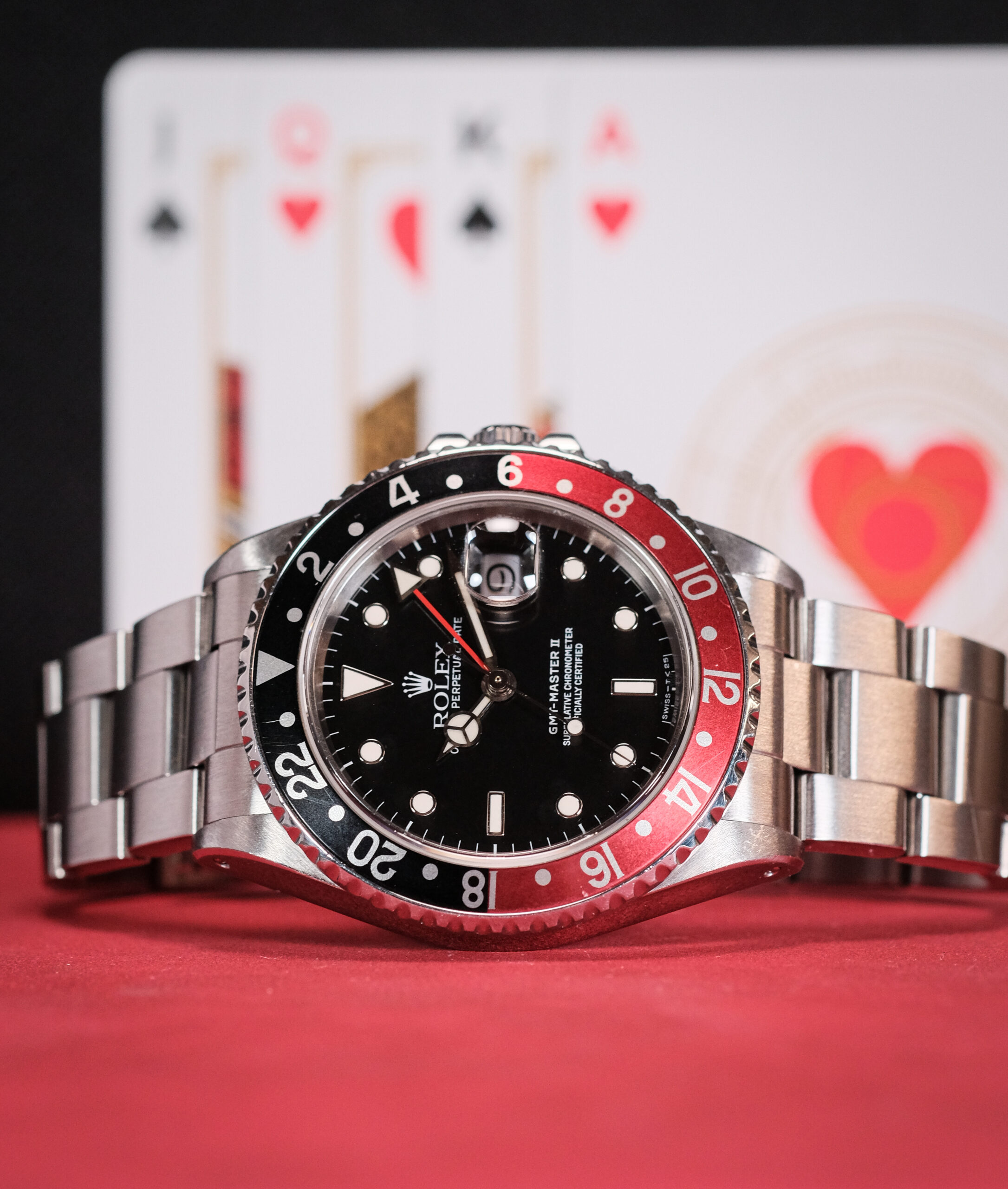
GMT-Master II 16760 (1986)
Rarity in a vintage Rolex watch is rarely just about production numbers.
Often referred to as the ‘Fat Lady’ or ‘Sophia Loren,’ the 16760 holds a unique place in Rolex history as the first ever GMT-Master II. When the new GMT-Master II movement was introduced, it would not fit the existing GMT case, requiring a thicker case derived from the Sea-Dweller.
As a result:
-
The 16760 has a broader, more robust profile
-
Production was relatively short
-
It was the first GMT-Master to feature a Coke bezel
Rarity becomes more nuanced when condition and originality are considered. Many 16760s suffered from dial crazing over time, leading to widespread dial replacements during servicing.
This example retains its original dial, with no signs of spidering and at this stage, if it were going to craze, it already would have. A short-production reference combined with untouched components is precisely where meaningful rarity exists.
3. Why Condition Matters Most

Daytona 16520 “Zenith” (1991)
Condition is often the deciding factor when buying a vintage Rolex watch – especially with Daytonas.
The 16520 marked a turning point as the first automatic Rolex Daytona, powered by the Zenith El Primero movement. This early 1991 black-dial example stands out for its exceptional preservation.
Key details include:
-
Full, sharp lugs with crisp edges
-
Clear bezel engraving with intact paint
-
Bracelet with minimal stretch
-
Sharp coronet and definition on the clasp
Everything is original, and everything is correct. With Daytonas, condition is unforgiving – soft cases, over-polishing, or tired bracelets quickly erode desirability. This watch avoids all of those pitfalls.
Final Thoughts
Buying a vintage Rolex watch is never just about age or reference number.
The three pillars to focus on are:
-
Originality – untouched dials, hands, and components
-
Rarity – short production runs and unaltered survivors
-
Condition – sharp cases, strong bracelets, and clarity throughout
There are other considerations, of course, and working with a trusted seller is essential when investing at this level.
All the time of writing, all three watches discussed are currently in stock at Oakleigh Watches and available on the website. For a closer look, we recommend watching the full video on our YouTube channel.
If you have any questions, we’re always happy to talk vintage Rolex watches.